
Investors
Investor resources
Frequently asked questions
FIBRA Macquarie's real estate trust certificates (Certificados bursátiles fiduciarios inmobiliarios), or CBFIs, trade on the Mexican Stock Exchange (Bolsa Mexicana de Valores) under the ticker symbol "FIBRAMQ".
FIBRA Macquarie is managed by Macquarie Asset Management México, S.A. de C.V., formerly MMREM, a Mexican corporation and part of Macquarie Asset Management a division of Macquarie Group. Macquarie Asset Management is a global asset manager providing access to specialist investment expertise across public and private markets including fixed income, equities, multi-asset solutions, private credit, infrastructure, renewables, natural assets, real estate, and asset finance.
FIBRA Macquarie invests in real estate opportunities in Mexico. We operate industrial and retail properties in major distribution and metropolitan markets. For details on our locations and properties please refer to the Properties section of our website.
Please refer to Distributions section on our website, which describes FIBRA Macquarie's distribution policy.
December 31
FIBRA Macquarie's independent auditors are KPMG Cárdenas Dosal, S.C.
FIBRA Macquarie's global offering of real estate trust certificates (Certificados bursátiles fiduciarios inmobiliarios), or CBFIs, priced on December 13, 2012 and closed on December 19, 2012. The CBFIs commenced trading on the Mexican Stock Exchange (Bolsa Mexicana de Valores) on December 14, 2012.
FIBRA Macquarie is a real estate investment trust (fideicomiso de inversión en bienes raíces), or FIBRA.
A FIBRA is a Mexican trust dedicated to the acquisition and development of real estate in Mexico held for leasing.
FIBRA Macquarie targets industrial and retail real estate opportunities in Mexico with a primary focus on stabilized income-producing properties.
FIBRA Macquarie is listed on the Mexican Stock Exchange (Bolsa Mexicana de Valores) and its real estate trust certificates (Certificados Bursátiles Fiduciarios Inmobiliarios), or CBFIs, can be purchased through any registered broker. To invest in FIBRA Macquarie, please contact your broker or financial advisor.
Mexico City, Mexico
Please contact your broker or financial advisor.
Analyst coverage
| Firm | Analyst | Phone | |
|---|---|---|---|
| Actinver | Valentin Mendoza | +52 55 1103 6600 | vmendoza@actinver.com.mx |
| BofA Securities | Alan Macias | +52 55 5201 3433 | alan.macias@bofa.com |
| Barclays | Pablo Monsivais | + 1 212 526 1094 | pablo.monsivais@barclays.com |
| BBVA | Francisco Chávez | +52 55 5621 9703 | f.chavez@bbva.com |
| Bradesco | Juan Ponce | +1 347 703 9252 | juan.ponce@bradescobbi.com |
| BTG Pactual | Gordon Lee | +1 646 924 2473 | gordon.lee@btgpactual.com |
| BX+ | Elisa Vargas | +52 55 5625 1500 | evargas@vepormas.com |
| Citi | Andre Mazini | +55 11 4009 2017 | andre.mazini@citi.com |
| GBM | Anton Mortenkotter | +52 55 5480 5700 | eamortenkotter@gbm.com |
| Goldman Sachs | Jorel Guilloty | +55 11 3372 3522 | jorel.guilloty@gs.com |
| J.P. Morgan | Adrian Huerta | +52 81 8152 8720 | adrian.huerta@jpmorgan.com |
| Morgan Stanley | Alejandra Obregon | +52 55 5282 6732 | alejandra.obregon@morganstanley.com |
| Scotiabank | Francisco Suárez | +52 55 9179 5209 | francisco.suarez@scotiabank.com |
FIBRAMQ is followed by the analyst(s) listed above. Please note that any opinions, estimates or forecasts regarding FIBRAMQ's performance made by these analysts are theirs alone and do not represent opinions, forecasts or predictions of FIBRAMQ or its management. FIBRAMQ does not by its reference above or distribution imply its endorsement of or concurrence with such information, conclusions or recommendations.
Fiscal information for US investors
FIBRA Macquarie has elected to be treated as a corporation for US federal income tax purposes. Consequently, for US federal income tax purposes, dispositions and transfers of interests in FIBRA Macquarie should be subject to the treatment applicable to the disposition or transfer of corporate stock. US tax rules specific to the treatment of the disposition or transfer of interests in a partnership—including Section 1446(f) of the US Internal Revenue Code—should not apply in respect of FIBRA Macquarie.
It is also our view that FIBRA Macquarie should not be considered a passive foreign investment company (“PFIC”) given that a foreign company would be considered a PFIC only if (i) at least 75% of its gross income is passive income or (ii) at least 50% of the value (determined based on a quarterly average) of its assets is attributable to assets that produce passive income or which are held for the production of passive income. Passive income includes rents, however, rents from real property generally will not be treated as passive income (and real property producing these rents generally will not be treated as passive assets) if they are derived from leasing real property with respect to which the lessor, through its own officers or employees, regularly performs active and substantial management and operational functions while the property is leased.
For FY 2012 and 2013 we believe that FMQ was a PFIC for U.S. federal income tax purposes given the management and operation of FMQ’s properties were performed by third parties. In 2014, however, FMQ established an internal property administration platform (“MPA”), which provides leasing, accounting, operational and other property administration services with respect to FMQ’s industrial properties. MPA, through its officers and employees, provides a number of management and operational functions with respect to FMQ’s properties. We consider that these activities should constitute active and substantial management and operational functions for purposes of the PFIC rules. Furthermore, FMQ has elected to treat MPA as a “disregarded entity”, which is wholly owned by FMQ, for United States federal income tax purposes. Therefore, FMQ will be treated, for purposes of the PFIC rules, as performing any activities undertaken by MPA. As such, since 2014 we believe the rents received from the properties managed by MPA should not be treated as passive income and such properties should not be treated as passive assets for purposes of the PFIC rules.
Quick Links
Contact us
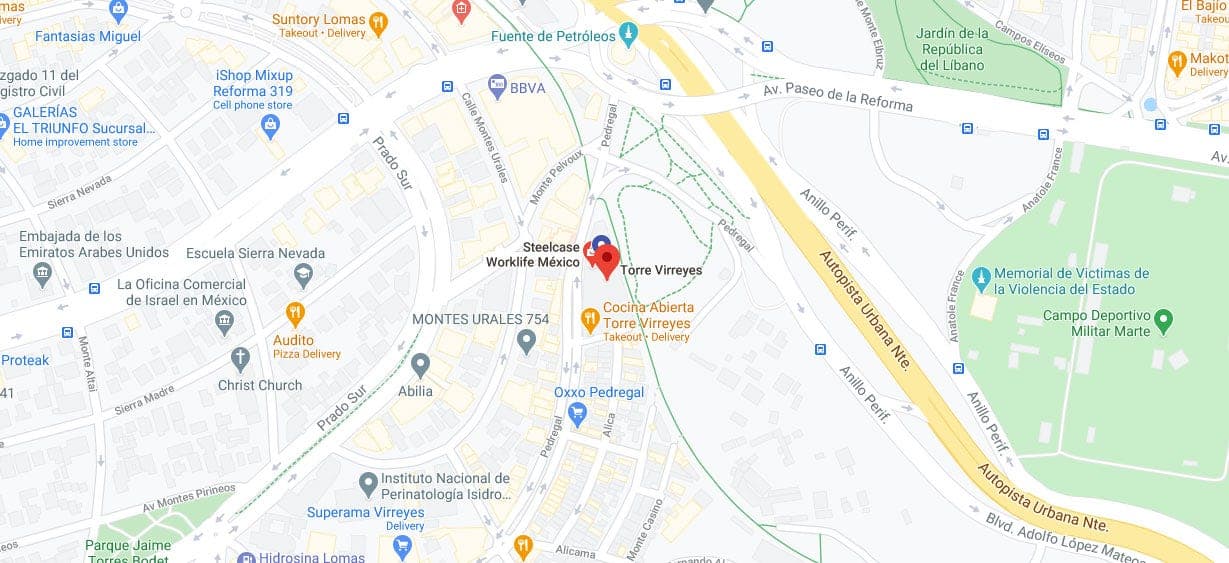 Get directions
Our corporate office
Pedregal 24 Piso 21, Torre Virreyes
Lomas – Virreyes, Molino del Rey
11040, Ciudad de Mexico
México
fibramq@macquarie.com
+52 (55) 9178 7700